
Choose the finish.
Define the movement.
Custom wholesale roller shades with light-control fabrics, hardware choices, and manual or motorized operation. Compare open roll, fascia, recessed pockets, bottom-up systems, and coupled shades.
Fabric, hardware, and operation work together.
Start with the room’s daylight and privacy requirements, then select how the roller will look, where it will mount, and how the shade will move. Uprise works with Rollease Acmeda hardware and Automate motorization to review the complete specification.
Solar screen, light-filtering, and blackout fabrics produce different results. Fabric opacity alone does not resolve perimeter light gaps. Choose the mount and coverage with the material, and review a physical sample for color and light transmission.
Compare roller-shade configurations.
Open roll, fascia, and pocket describe the mounting or enclosure. Bottom up describes the direction of coverage; coupled describes how adjacent shades connect. These choices are not mutually exclusive, and each pairing needs configuration review.
Open roll
The fabric roll and mounting hardware remain visible without a decorative front cover. This is a clean option where exposed hardware suits the interior and the roller can sit in a suitable recess or above the opening.
Review the bracket appearance, fabric roll direction, projection, and clearance for handles or trim. The fabric rolls off the front or back according to the approved specification; roll direction affects its distance from the glass.
Supplier system details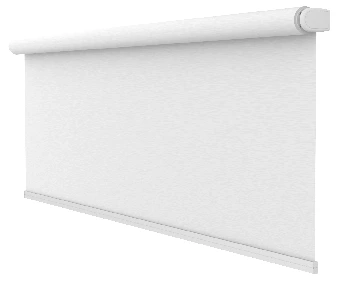
Product imagery: Rollease Acmeda
Fascia
A decorative fascia conceals the front of the roller and its hardware for a more finished appearance. Rollease Acmeda supplies fascia systems for compatible chain and motorized roller configurations.
Specify fascia profile, dimensions, color, end treatment, and mounting position. A front cover is not automatically a fully enclosed cassette; confirm which surfaces are concealed and how the roller will be accessed for service.
Supplier system details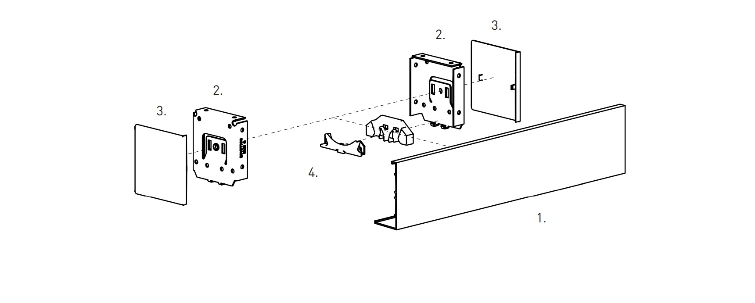
Product imagery: Rollease Acmeda
Pocket / recessed mount
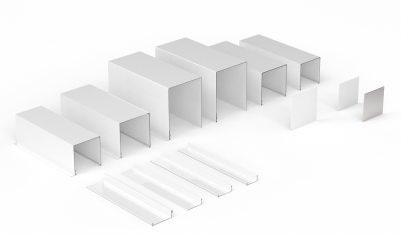
A recessed ceiling pocket hides the roller within the building finish. Rollease Acmeda offers aluminum pocket systems for compatible single or dual treatments, with closure and end-plate options.
Coordinate the pocket before ceiling work is completed. Agree on internal dimensions, fixing surfaces, fabric exit, removable access, and any motor wiring. The pocket must fit the selected hardware, rolled fabric diameter, and service requirements.
Supplier system details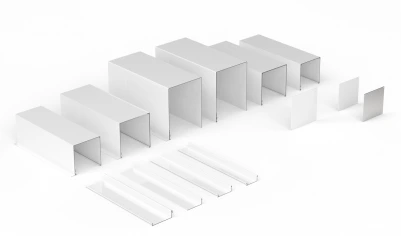
Product imagery: Rollease Acmeda
Bottom-up roller shades
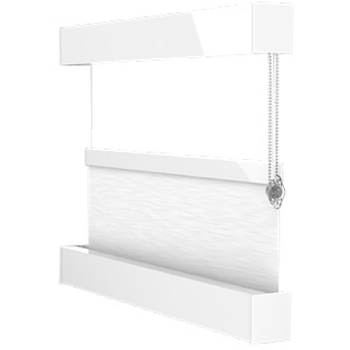
A bottom-up roller system covers the lower part of a window while leaving the upper section available for daylight. It can suit street-facing rooms or office glazing where the client wants low-level visual privacy.
Rollease Acmeda’s Skyline Bottom Up system uses dedicated hardware, cord guidance, and a self-leveling hem bar. This is a specific roller configuration rather than simply installing a standard roller upside down. Review fixing positions, travel, cord routing, fabric, and the available operating system.
Supplier system details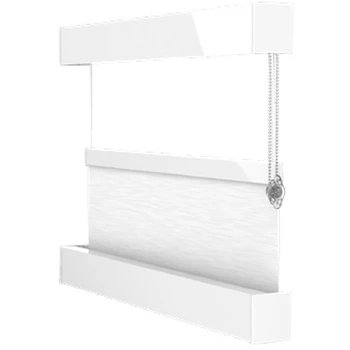
Product imagery: Rollease Acmeda
Coupled / linked roller shades
Coupled shades connect adjacent rollers so one approved motor or chain control can operate multiple fabric panels. Rollease Acmeda’s Easy-Link system is designed for this arrangement and allows individual shade-level adjustment.
Use linked panels to plan a long run of glazing while retaining separate fabric widths. Confirm each panel’s size, the total load, bracket positions, allowable gaps, alignment, and access. Motor torque and system limits apply to the combined assembly.
Coupled shades are mechanically linked. Independent motorized shades grouped in an app remain separate systems. A dual shade places two fabric layers at one opening; that is also a different arrangement.
Supplier system details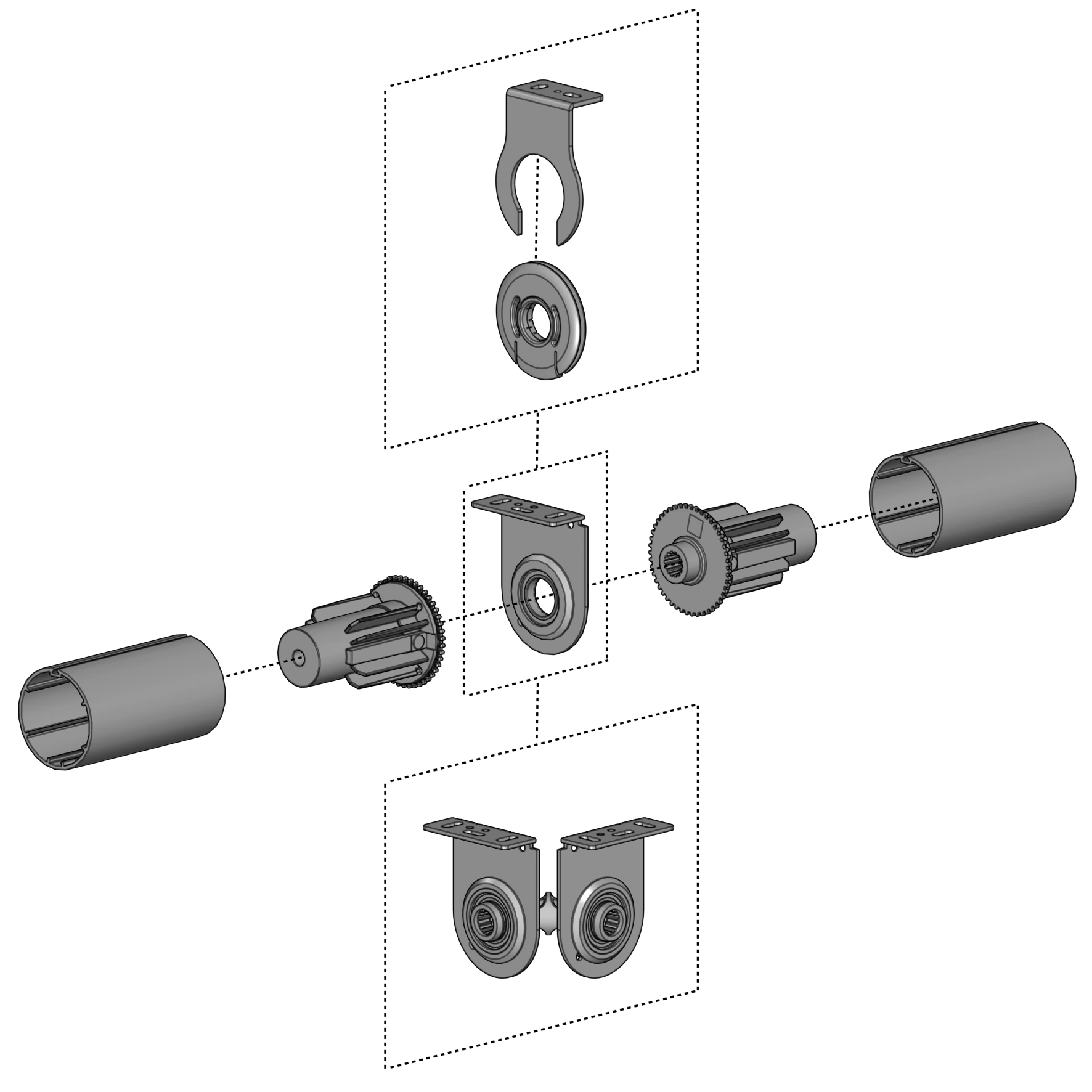
Product imagery: Rollease Acmeda
Build the roller-shade specification.
- Fabric and coverage.
Provide collection, color, openness or light-control preference, finished dimensions, and mounting type. Include room labels and quantities.
- Enclosure and finish.
Choose open roll, fascia, or pocket and provide the required finish. For recessed mounting, include architectural sections and access details.
- Movement and connections.
Specify standard top-down or bottom-up coverage. Identify linked panels, coupling positions, independent operation, or a dual-layer requirement.
- Operation and site details.
Include manual or motorized operation, power availability, controls, clearances, fixing surfaces, and installation conditions. Uprise will review the complete configuration.
Questions from the trade.
What is the difference between fascia and a pocket?
Fascia covers the front of the roller. A pocket recesses the roller within the ceiling or building finish and needs construction coordination and service access.
Can a roller shade rise from the bottom?
A dedicated bottom-up roller system can cover the lower glazing while leaving the upper section open. It requires the appropriate hardware and installation configuration.
What are coupled roller shades?
Coupled or linked shades connect multiple adjacent rollers to a shared control using approved coupling hardware. The combined dimensions and load need system review.
Are coupled shades the same as dual shades?
No. Coupled shades link adjacent rollers. Dual shades use two separate fabric layers at one opening, such as a solar screen and blackout treatment.
Does a blackout fabric prevent every light gap?
No. Coverage, mounting, top treatment, and perimeter gaps also affect the result. Discuss the complete room-darkening application with Uprise.
Technical resources.
Bring us your project details.
Share the application, dimensions, product choices, and control requirements so Uprise can review the configuration.